Triumphpforte
Triumphpforte – English
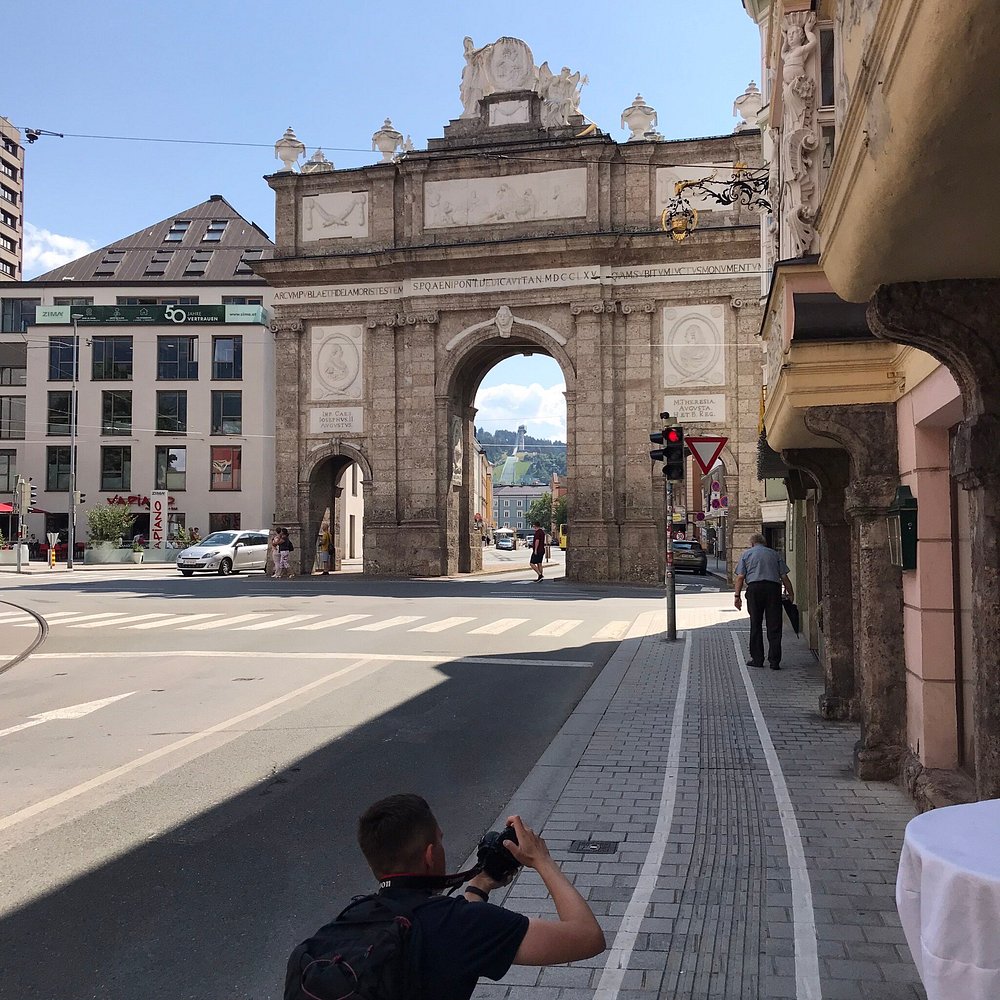
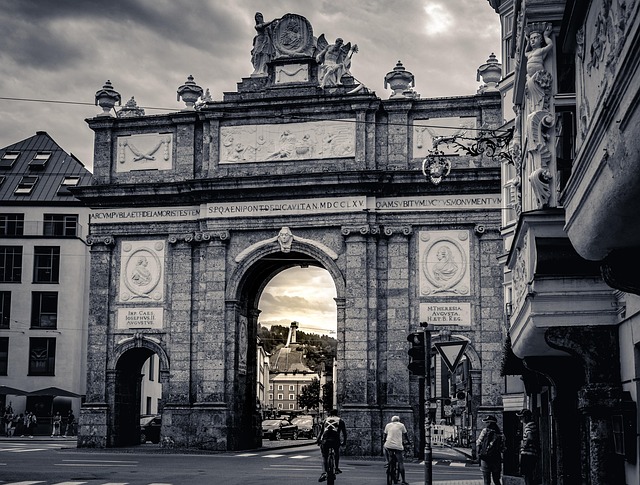
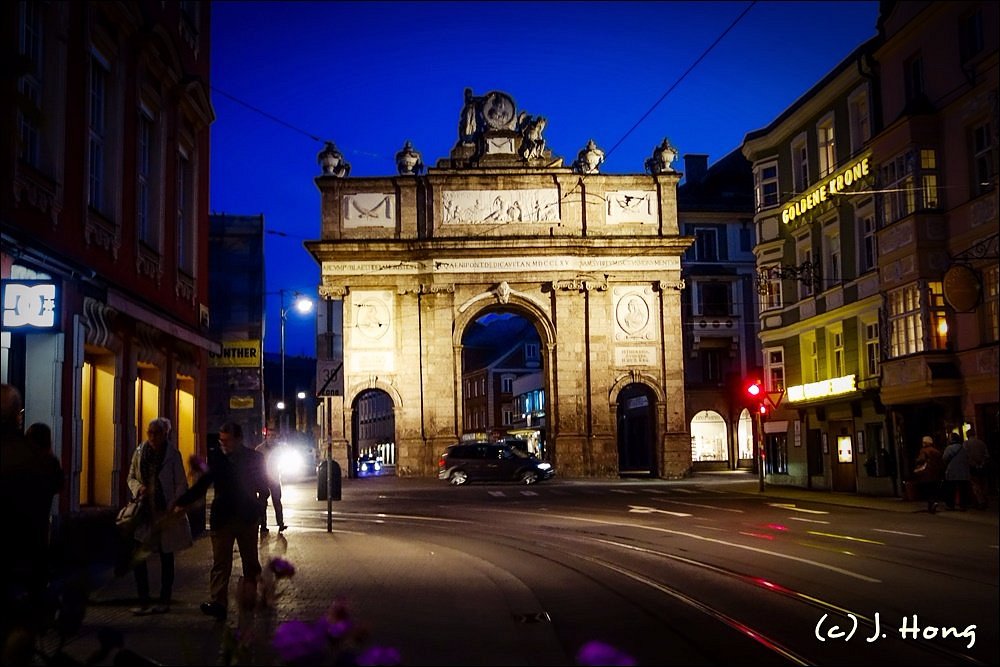
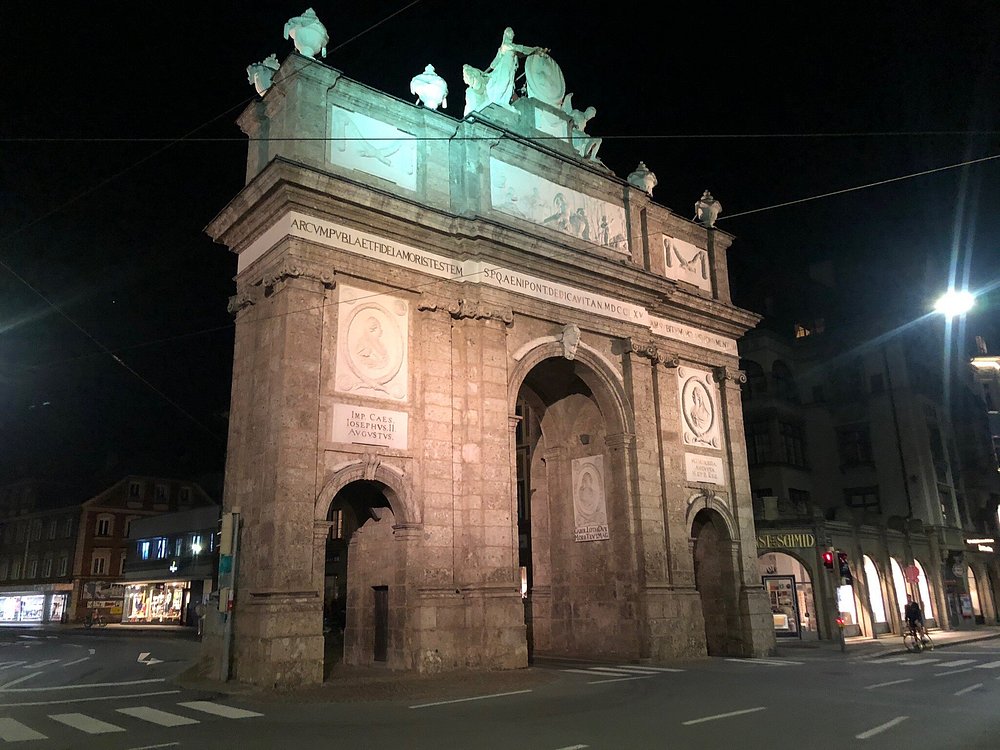
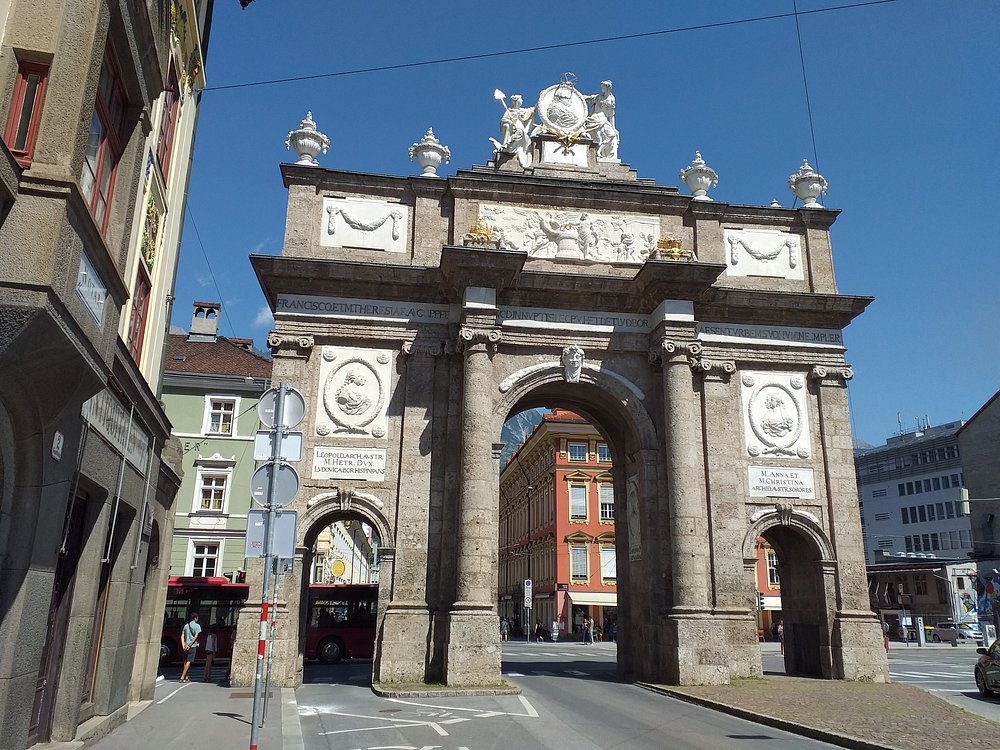
The Triumphpforte, or Triumphal Arch, stands at the southern end of Maria-Theresien-Strasse and marks one of the most important historical monuments in Innsbruck. Built in 1765, the arch commemorates the marriage of Archduke Leopold, son of Empress Maria Theresa, but it also carries a more somber meaning, as Leopold’s father, Emperor Francis I, died unexpectedly during the celebrations.
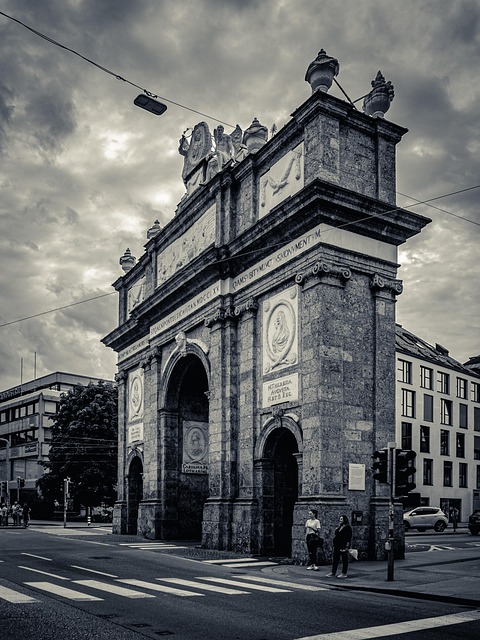
Constructed from stone taken from the demolished city gates, the Triumphpforte symbolically replaced the old entrance to the city. Its richly detailed reliefs reflect both joy and mourning: one side celebrates the wedding festivities, while the other honors the late emperor. This dual symbolism makes the monument unique among European triumphal arches.
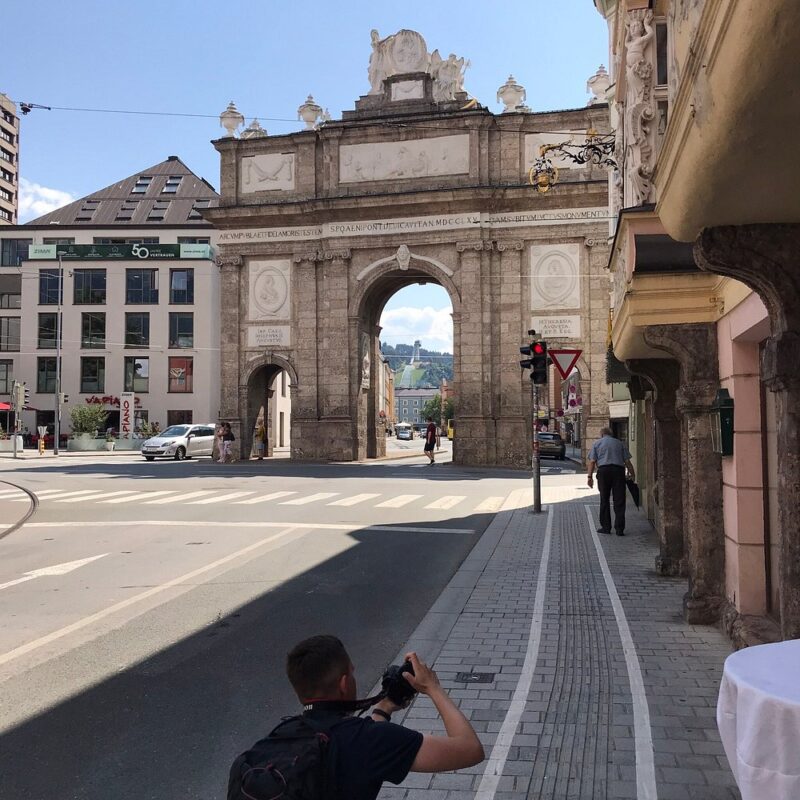
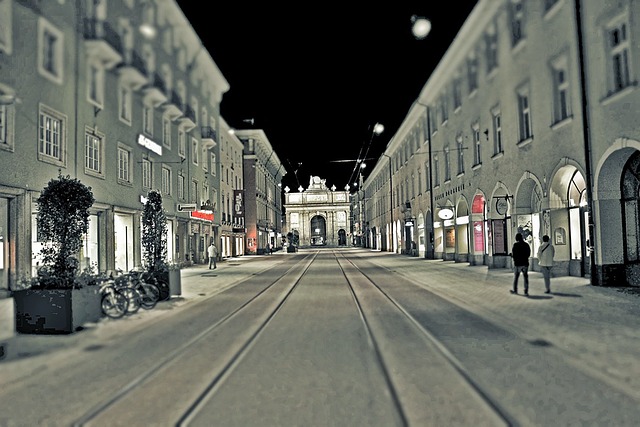
Architecturally, the structure blends Baroque elements with classical influences, standing as a reminder of Innsbruck’s role within the Habsburg monarchy. Today, it serves as a gateway between the historic Old Town and the more modern parts of the city. With the Nordkette mountains visible in the background, the arch creates a striking visual axis along Maria-Theresien-Strasse.
Whether visited for its historical significance or simply admired during a walk through the city centre, the Triumphpforte is an essential landmark that reflects Innsbruck’s imperial heritage and layered history.
Triumphpforte – Deutsch
Die Triumphpforte befindet sich am südlichen Ende der Maria-Theresien-Straße und zählt zu den bedeutendsten historischen Bauwerken Innsbrucks. Sie wurde 1765 anlässlich der Hochzeit von Erzherzog Leopold, Sohn von Kaiserin Maria Theresia, errichtet. Während der Feierlichkeiten verstarb jedoch überraschend Kaiser Franz I., wodurch das Bauwerk zugleich Freude und Trauer symbolisiert.
Die Triumphpforte wurde aus Steinen der ehemaligen Stadttore errichtet und ersetzte damit symbolisch den früheren Zugang zur Stadt. Ihre Reliefdarstellungen zeigen auf einer Seite die Hochzeitsfeierlichkeiten, auf der anderen Seite Gedenkmotive für den verstorbenen Kaiser. Diese doppelte Bedeutung verleiht dem Monument eine besondere historische Tiefe.
Architektonisch verbindet die Triumphpforte barocke Gestaltung mit klassizistischen Einflüssen und erinnert an die Bedeutung Innsbrucks innerhalb der Habsburgermonarchie. Heute markiert sie den Übergang zwischen Altstadt und moderner Innenstadt und bildet gemeinsam mit der Nordkette im Hintergrund eine eindrucksvolle Sichtachse.
Die Triumphpforte ist nicht nur ein architektonisches Denkmal, sondern auch ein bedeutendes Symbol für Innsbrucks bewegte Geschichte und seine kaiserliche Vergangenheit.